
Dynamic transmission fluid exchange: changing all of the fluid, not half
An ordinary gearbox oil change only renews the fluid that drains out, often around half. A dynamic exchange replaces nearly all of it. When your gearbox is due, what we do for you and how long it takes.
By Rootes Motors
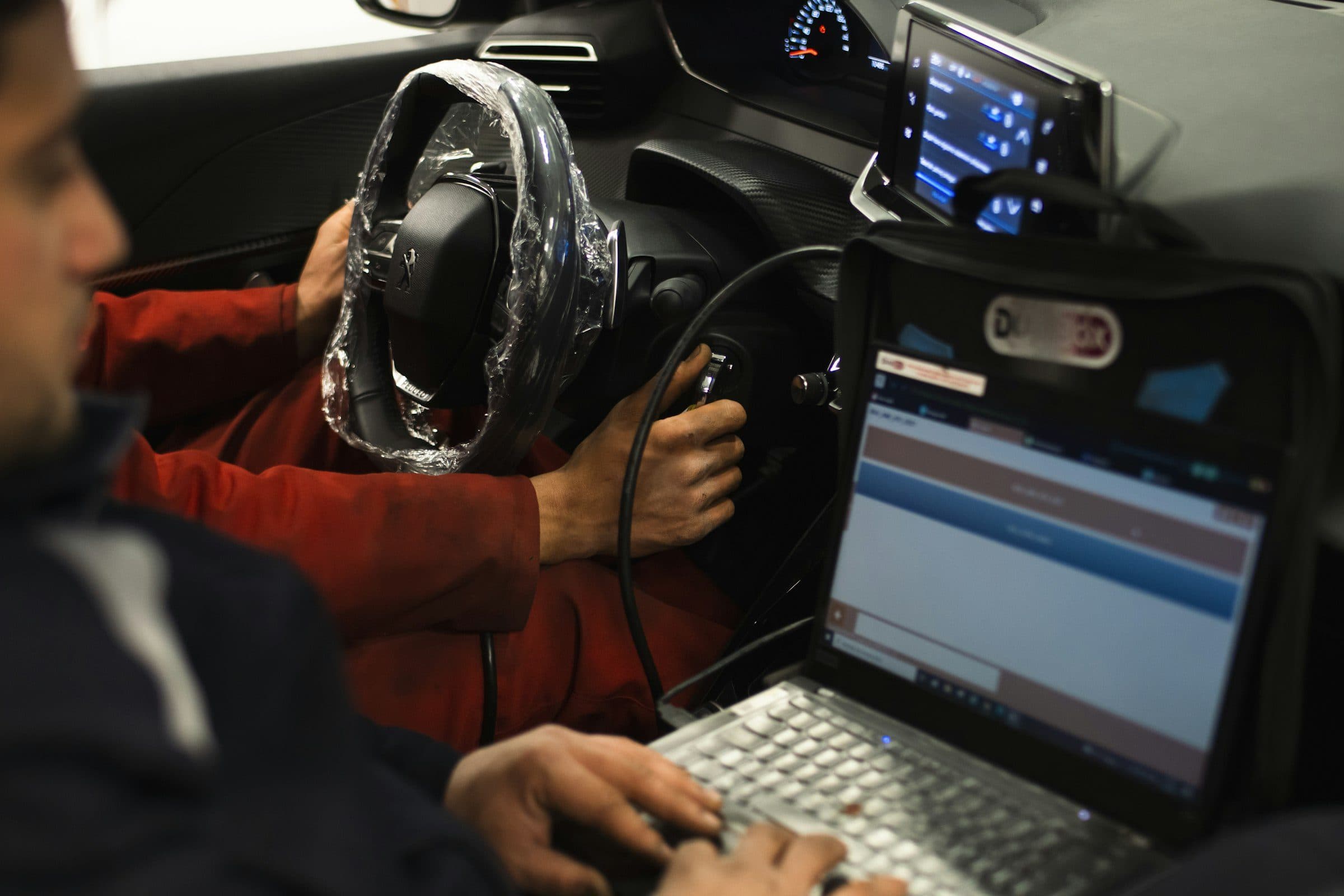
The fluid in an automatic gearbox lubricates it, keeps it cool and carries the pressure that makes every gear change. When it gets old, you feel it: changes that are slow, harsh or slurred. Changing it is the cheapest protection an expensive gearbox can have. The catch is that an ordinary gearbox oil change only renews part of it. A dynamic fluid exchange renews nearly all of it, and it is what we now do in the workshop, from £799.
When is your gearbox due?
Our general advice is to have the gearbox fluid serviced around every 60,000 miles on average. Do it sooner if the car tows, does lots of short trips, sits in heavy traffic or works hard in the heat. Your handbook or service book may give its own figure, and if you are not sure, ask us and we will check it for your car.
Plenty of cars left the factory with no gearbox fluid change on the schedule at all, sold as "filled for life". The fluid still ages. ZF, who make the automatic gearboxes in most BMWs, Jaguars and Land Rovers, says its oil wears faster with high-speed driving, towing and sporty driving,[1] and its own fluid data sheet recommends a change after 150,000 km, sooner with heavy use or a history nobody knows.[3] Our guide Is ZF 8HP gearbox oil really lifetime fill? goes through it.
If you have bought a used automatic and nobody can tell you when the gearbox was last serviced, treat it as due now.
A normal oil change versus a full exchange
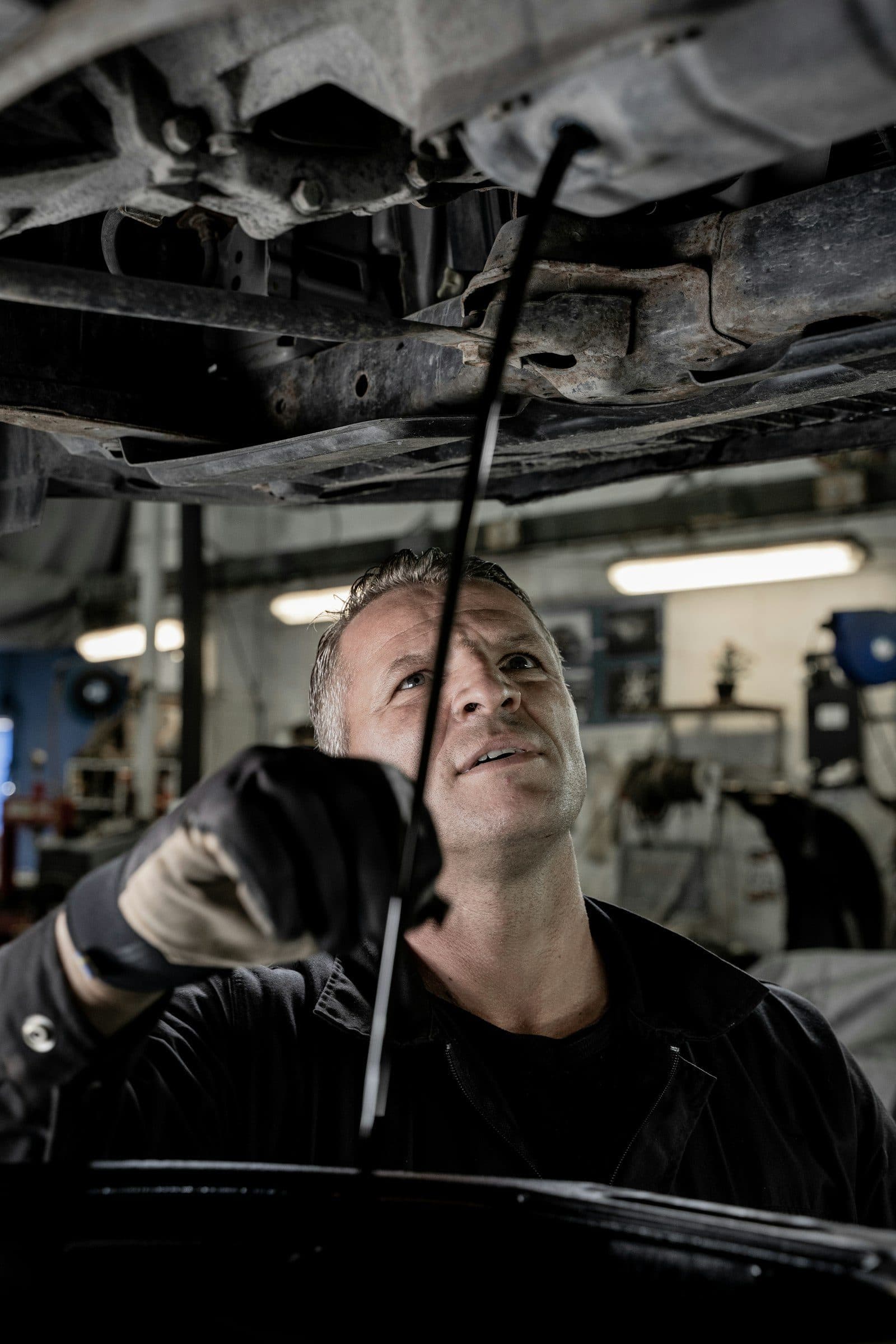
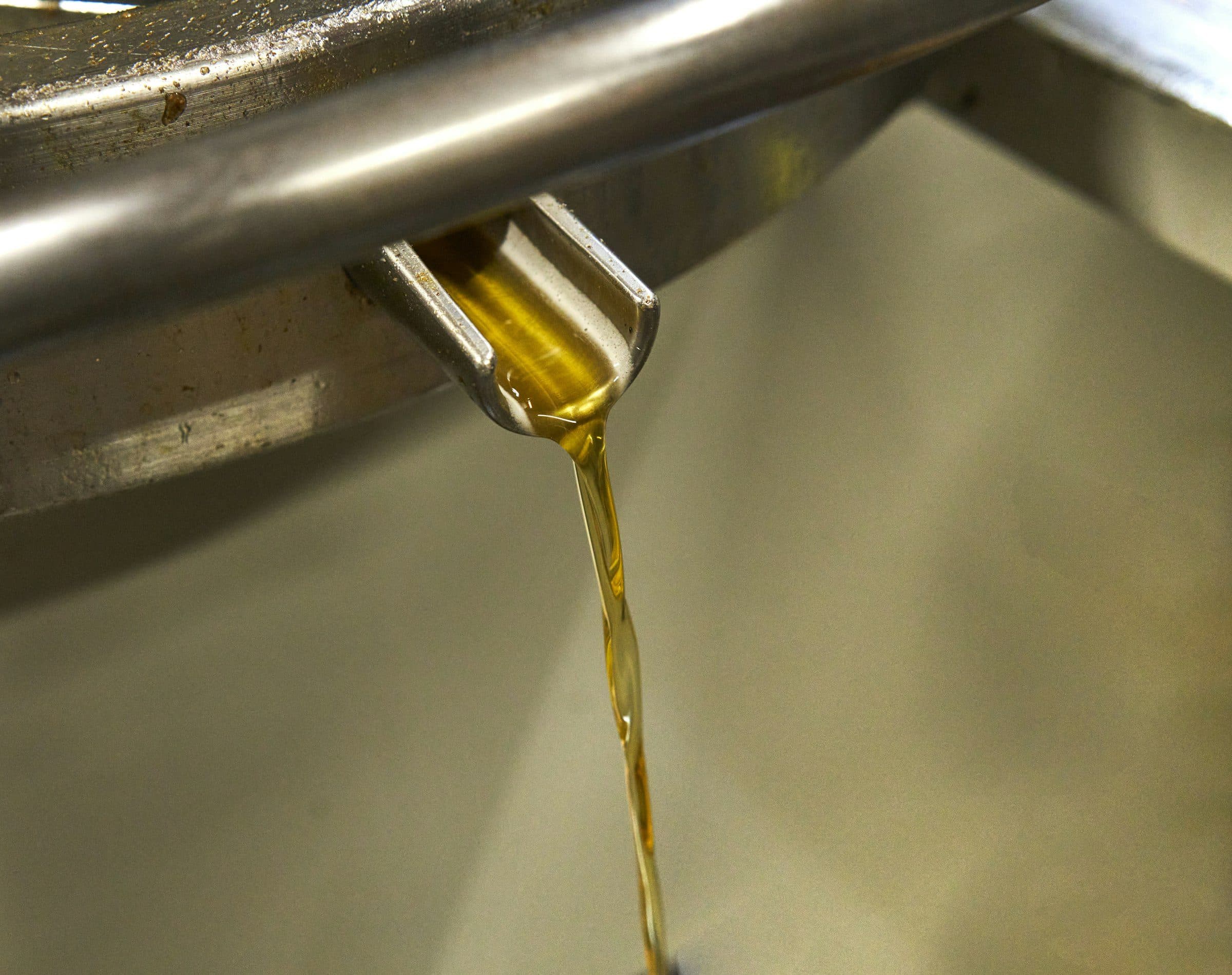
A normal gearbox oil change (our static service, from £399) drains what runs out of the gearbox, renews the pan and filter where there is one, and refills it. On the popular ZF gearboxes around 4 to 5 litres come out of the drain.[4] The rest stays inside, in the torque converter and the cooler, and mixes with the new fluid.
A dynamic exchange (from £799) does all of that, then connects our machine to the pipes that run to the gearbox's oil cooler. With the engine running, the old fluid is pushed out and the same amount of new fluid goes in, until what comes out is as clean as what goes in.
Put simply: a normal oil change often renews only around half of the fluid, and the dynamic exchange renews nearly all of it.
What we do for you
- Check the car first. We read any gearbox fault codes, look at the condition of the old fluid and road-test the car, so we know how it drives before we start.
- Renew the pan and filter where your gearbox has them, with new seals.
- Connect the machine into the gearbox's cooler pipes.
- Exchange the fluid, measured litre for litre, old out and new in, with the right fluid for your gearbox by part number.
- Set the level at the right temperature, the way the gearbox maker says, never a guess.
- Reset the gearbox's learned settings where it needs it, so it relearns its changes on fresh fluid.
- Road-test it again and check for leaks.
- Report back. We tell you what we found, and the work goes into the record we email you, with the next gearbox service noted against your car.
How long it takes
Usually about 2½ to 3 hours of work. Most cars are ready the same day; we give you a time when you book.
For the technically minded
How the exchange works. The machine goes in between the gearbox and its cooler, with the adapter made for that connection. The gearbox's own pump pushes its used fluid out into the machine, and the machine feeds the same amount of new fluid back in, so fluid a drain leaves behind, including what is in the torque converter, is carried out and replaced. Changing the fluid in a "lifetime" gearbox properly needs exactly this kind of equipment, filling from below with the torque converter engaged or using an external pump.[5]
No mixing between cars. Before every job the machine is emptied, then its hoses and tank are run through with the fluid your gearbox needs and that is sent to waste. Only then is it filled for your car. We keep exchanging until what comes out looks like what goes in, not until a number on a chart is reached.
Setting the level. ZF's procedure reads the gearbox oil temperature on a tester, holds the engine at 2,000 rpm to fill the torque converter and checks the level at 30 to 50 °C.[2] Too little damages the gearbox; too much comes out of the overflow when hot.[1] We follow the maker's own hot-check for every gearbox.
On the ZF 8HP the filter is built into the pan, so the whole pan is renewed. The adaptations are reset with a diagnostic tool and the road tests before and after are done on live data.
Which gearboxes suit it
A dynamic exchange suits a conventional automatic, the kind with a torque converter and an oil cooler to connect into. Dual-clutch gearboxes (such as VW's DSG) and CVTs work differently inside, and we normally give them the static service with the maker's fluid instead. We tell you which your car needs before we start.
Not sure which gearbox you have? Send us the registration and we will check from the VIN. Our gearbox pages go into each one: the ZF 8HP, the ZF 6HP and the Mercedes 7G-Tronic and 9G-Tronic.
What you get from it
- Smoother changes, in most cases, once the gearbox has relearned on fresh fluid.
- Protection for an expensive gearbox. A fluid service costs a fraction of a replacement gearbox.
- Fresh fluid all the way through, including the torque converter and cooler, not just what drains from the pan.
- The right fluid, by part number. ZF says to use only the fluid it specifies for the gearbox and no additives,[1] so we never use a "universal" one.
- A fixed price agreed before we start, in writing, from your registration.
- A straight answer if it is not the fluid. Fresh fluid will not cure a mechanical or electrical fault. If the road test points to one, we say so before you spend more.
Questions we get asked
How often should an automatic gearbox be serviced?
Our general advice is around every 60,000 miles on average, and sooner for a car that tows, does lots of short trips or works hard. If your handbook gives a figure, we follow it. With an unknown history, do it now.
Static or dynamic: which one does my car need?
On a conventional automatic with an unknown history, or one that is overdue, the dynamic exchange is the one that actually renews the fluid. A static service is a good option for a gearbox that has been serviced on time, and it is the right service for most dual-clutch gearboxes and CVTs. Tell us the car and its history and we will say which, and why.
How long will you have my car?
The dynamic exchange is usually about 2½ to 3 hours of work, and most cars are ready the same day.
Do you change the filter on a dynamic exchange?
Yes. The dynamic exchange is everything in the static service plus the machine, so the pan and filter are renewed wherever the gearbox has them.
Won't fluid left in the machine from the last car get into mine?
No. Before every job the machine is emptied and run through with your gearbox's own fluid, which goes to waste, and only then filled for your car.
How much does it cost?
The static service is from £399 and the dynamic fluid exchange is from £799. Most cars are priced individually, because the fluid your gearbox takes, how much it holds, its pan and filter and how much has to come off to reach them all differ. Send us your registration and we confirm a fixed price in writing before any work starts. More on both services is on our transmission servicing page.
Sources
An ordinary gearbox oil change only renews the fluid that drains out, often around half.
Book it with us
Dynamic fluid exchange
Renews the fluid in the torque converter, cooler and valve body, not just what drains out.
from £799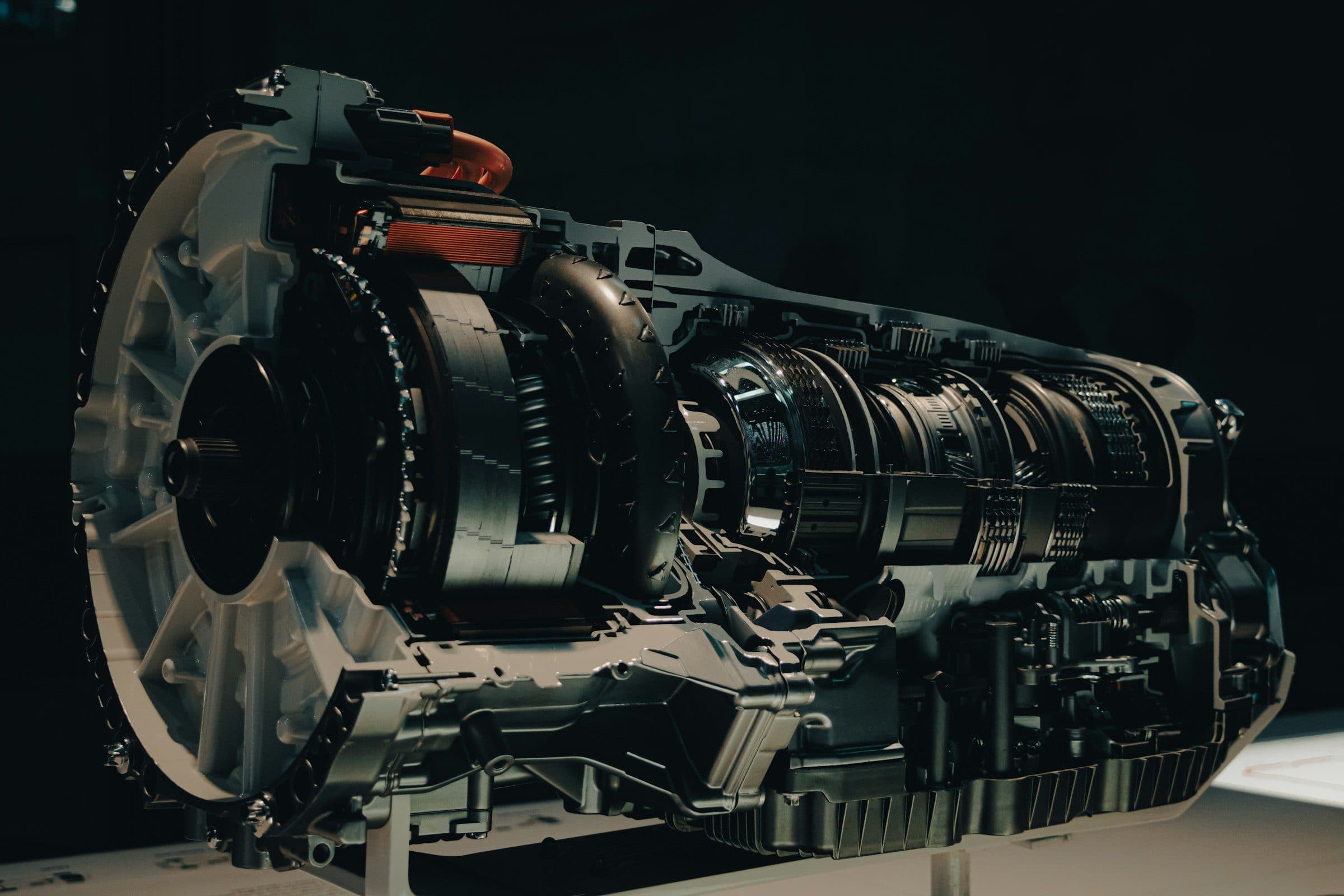
Happy to talk it through