
Loading
Loading the next page.Process · Principles
How we work
No upsells. No guessing. Diagnostics before parts, and a phone call before any surprise on the bill. The principles below are not aspirational — they describe what happens on every job.
01
Diagnostics-led, not parts-led
When a car has a fault, the correct first step is finding out what is actually wrong. That sounds obvious, but most of the cars that come to us after a bad experience elsewhere have had parts replaced on a guess — sometimes two or three rounds of guessing before someone read the live data.
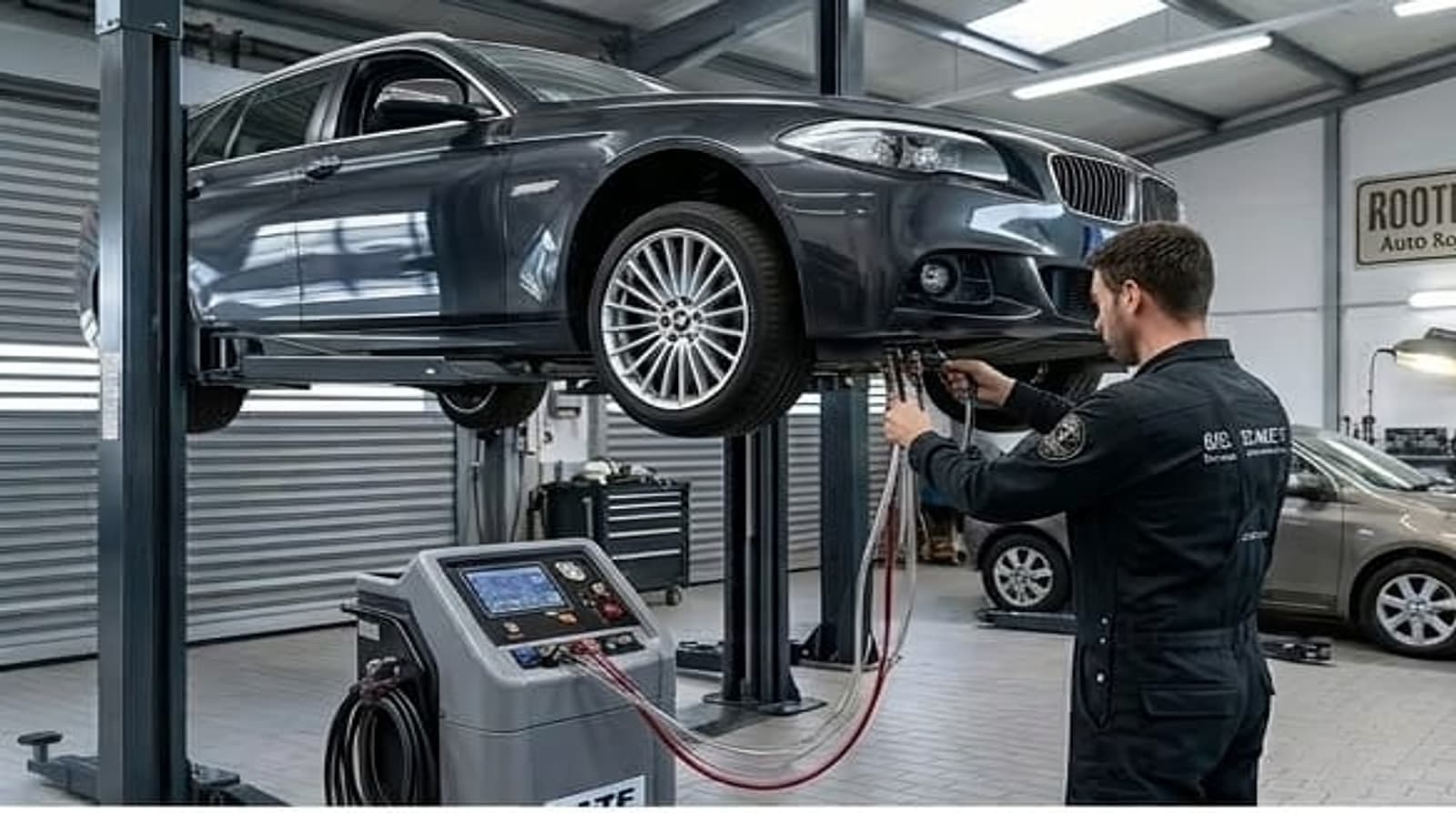
We use proper diagnostic hardware to pull freeze frames, live sensor data, and fault histories. Not a generic code reader from the parts counter — equipment that lets us follow the fault to its source. A fault code is the starting point of the investigation, not the conclusion.
Diagnostic time is charged as diagnostic time. You see it as a line item, you agree to it before we start, and it is on your invoice as its own entry. We are not going to bury the diagnostic cost inside the repair price, because doing so removes any incentive to spend the time the diagnosis actually needs. We charge for it separately because that is what it is.
When we have a diagnosis, we quote the repair separately. You approve the repair before we order parts. If you want a second opinion on our diagnosis, take it — that is the correct thing to do, and we will tell you the same.
02
Manufacturer-spec, not whatever-fits
Oils, coolants, gaskets and parts are matched to the manufacturer specification for the car in front of us. Not the nearest equivalent on the shelf. Not a generic blend that is "fine for most cars."
This matters because the specifications are not cosmetic. Some engines have valve-timing parts that are sensitive to oil additives — a generic oil will lubricate the engine but can wear those parts faster, in a way that shows up as an expensive repair long after the oil choice has been forgotten. Gearboxes are the same: each car has its own requirements, and we match them.
We apply this to coolant and fluid specifications as well. Mixing coolant types, or using a universal coolant where a manufacturer specifies a proprietary formulation, causes corrosion in the cooling system over time that is not visible until it becomes a problem. We use the right fluid and document what we have used so you know.
We quote it before we touch it
House rule · Workshop floor
03
The stop-and-call rule
If we open something up and find more than the quote covered, we stop. We call you. We explain what we have found, what it means, and what the options are. Every time.
You will get three clear options: proceed with the original job as quoted and defer the new finding; proceed with both the original job and the additional work at a revised price we give you on the call; or have us close it back up and take the car elsewhere. You are not locked in.
The alternative — assuming you want the additional work done because you brought the car in and presumably want it fixed — is how surprise bills happen. We would rather lose the job by giving you the choice than keep it by not giving you one.
The price for the additional work is a number we will stand behind, given to you on the call, before we do anything that incurs cost. Not "it'll be around..." A firm number.
DIAGNOSE
QUOTE
CALL
APPROVE
REPAIR
04
When we say no
If a repair does not make economic sense for the car, we will tell you. If the bill to fix it properly would exceed what the car is worth, we will say so, and we will explain what we would do if it were ours.
Sometimes the right answer is to find another car. We would rather lose the job than do work that does not serve you. This is not a generous policy — it is the only sensible way to run a workshop that people come back to.
We will also tell you when something does not need doing. If you come in with a list from another garage and half of it is not necessary, we will tell you which half. We are not going to service the items that do not need servicing because they appeared on a printout.
05
After the job
When you collect the car, we tell you what we did, what we saw that you should know about, and when we think you will next need us. The invoice matches what you approved. There are no mystery line items and no charges for work that was not agreed.
If we noticed something during the work that you should watch — not urgent, but worth knowing — we flag it and explain what to look for. You decide whether to act on it now or monitor it. Our job is to give you the information; the decision is yours.
The goal is that you leave with the car fixed, a clear invoice, and enough understanding of the car's condition to make informed decisions going forward. Nothing withheld, nothing obscured.
Ready?
Book a service or talk it through
Get an instant estimate, or speak to us directly on 07746 922 273.