
Mazda CX-30 temperature all over the place: not the thermostat after all
A 2021 Mazda CX-30 had a temperature that would not settle and heat only at higher revs. The owner suspected the thermostatic valve. Diagnostics and a close look found a radiator leak.
By Rootes Motors
A temperature that wouldn't settle
The owner of a 2021 Mazda CX-30 mild hybrid brought it in because the temperature would not settle. It kept changing, seemingly at random.
On a car that is only a few years old, that is an unsettling thing to see, and it is hard to live with. You do not know if it is a harmless glitch or the start of something serious, and an engine that really does overheat can be damaged quickly.
The owner had a theory: a faulty thermostatic valve. It was a reasonable one. A thermostat controls where the coolant goes, so when temperature misbehaves, it is the obvious suspect.
What you'll read online, and what we checked
Look up a car with an unstable coolant temperature and the thermostat is often the first thing named. It is a tempting answer, because it sounds like one simple part.
We did not start by ordering one. The symptoms on this car were more specific than "the temperature is wrong", and they pointed somewhere else. The coolant temperature rose and fell with engine revs, and the heating inside the car only worked at higher revs.
That pattern fits a cooling system which has lost coolant and taken in air. A thermostat replaced on this car would have left the real fault in place.
This is why we test before we fit. Computer diagnostics and a visual inspection of the cooling system cost far less than a part that doesn't solve the problem.
What you can check at home, and where to stop
Some of this is well within reach of any owner:
- Check for leaks and staining under the car, after it has been parked. Look at the ground and at the front underside.
- Check the coolant level in the expansion tank when the engine is cold, and note whether it is below the minimum mark.
- Notice when the symptom shows up, including whether the heater only warms at higher revs.
Stop here. Never open the coolant cap while the engine is hot. The system is under pressure, and it can spit out hot water and steam and scald you. AXA's advice is to leave a hot engine to cool for half an hour or so before you touch anything. If the temperature warning comes on or the gauge climbs, stop the car somewhere safe. Pressure testing and working on the system are jobs for the workshop.
What we did, in order
We ran computer diagnostics and looked at how the coolant temperature behaved. It rose and fell with engine revs.
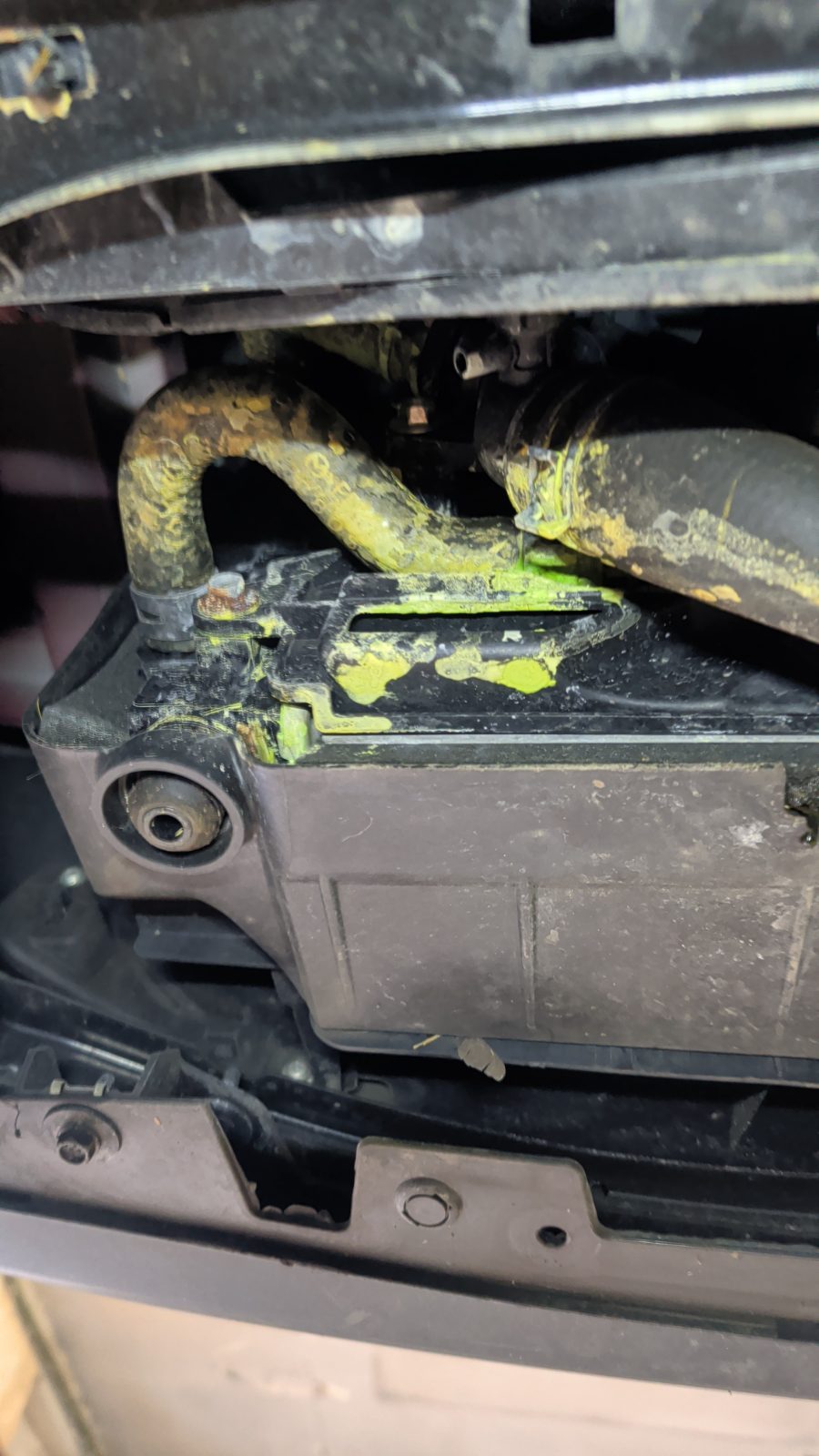
We inspected the cooling system by eye, and that is what found it: a small leak at the bottom of the radiator. As the photos show, there were dried green traces of coolant around the bottom of the radiator and on the core.
The leak appeared when the system was hot and under pressure. That explained the low coolant and the air in the system, the heat that only came through at revs and the gauge that dropped. Further diagnosis would have meant little until this was fixed, so we did not spend the owner's money on any more of it.
We decided against the thermostatic valve, the part the owner had suspected, because the evidence did not point to it.
What we found, what we fixed and what stops it coming back
The fault was a small leak at the bottom of the radiator. We fitted a new radiator and flushed the coolant, and that resolved the problem.
A small leak is easy to miss, particularly on a car that looks clean underneath. The most useful habit is simply looking at the coolant level when the engine is cold, and at the ground under the car, every so often. Coolant that keeps going down has gone somewhere.
Free 28-point health check with every visit, and it is exactly the sort of check where a stain under the car gets noticed.
The price, honestly
On this Mazda, the diagnostics were £79. The radiator was £332, removing and refitting it £260 and the coolant £38, which came to £709 in total. Our diagnostics start from £79, and each step was agreed with the owner.
If your temperature gauge is moving about or your heater has gone lukewarm, ask us to check it before you buy a thermostat. Our guide to dashboard warning lights explains which ones mean stop now, and bigger cooling and engine work is covered on our engine repairs page.
Questions we get asked
Why does my heater only work at higher revs?
On this Mazda it was because the cooling system had lost coolant through a radiator leak and taken in air. Have the level and the system checked.
Is it always the thermostat if my temperature gauge moves about?
No. A thermostat is a common suspect, but on this car the cause was a small leak at the bottom of the radiator.
How do I check my coolant safely?
Do it with the engine cold, by looking at the level in the expansion tank. Never open the cap on a hot engine.
Can I keep driving with a coolant leak?
It is not a good idea. If the warning light comes on or the temperature climbs, stop somewhere safe and have the car checked before going further.
A 2021 Mazda CX-30 had a temperature that would not settle and heat only at higher revs.
Have us do it
Diagnostics & electrics
Dealer-level diagnostics, and a written estimate before any work.
from £79
Happy to talk it through